The History of Traditional Tattoos
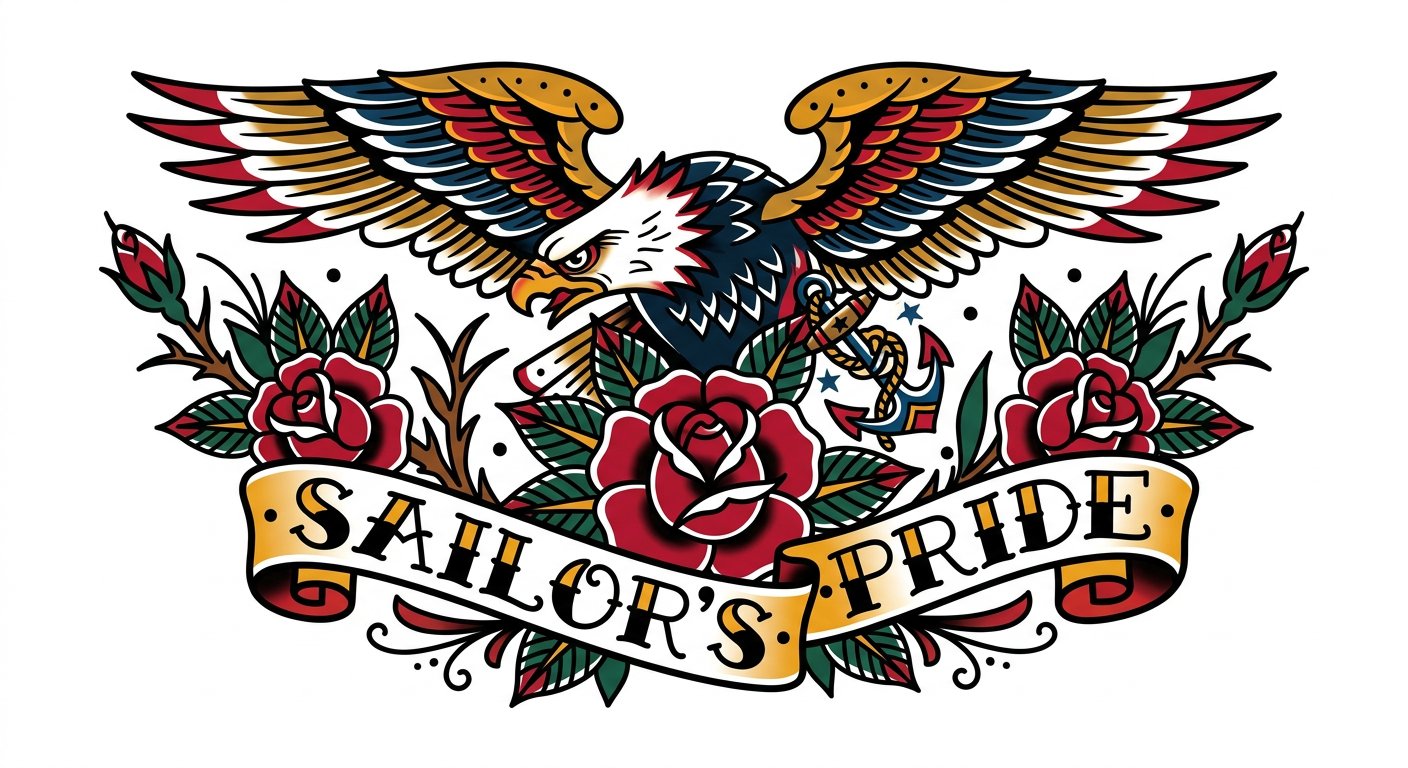
American Traditional — also called "old school" — was born in early 20th-century port towns and naval bases, where sailors picked up tattoos as souvenirs and tribal markings of the seafaring trade. The style was codified by Norman "Sailor Jerry" Collins, who worked out of Honolulu from the 1930s onwards and built a visual language around bold black outlines, a tight palette of red, green, yellow, and black, and instantly readable iconography drawn from naval life, Americana, and pin-up culture. By the 1970s, artists like Ed Hardy and Mike Malone had carried Sailor Jerry's grammar into the mainland tattoo scene, and by the 1990s old school had become the foundation of nearly every modern Western tattoo tradition. The style endures because it was engineered for one purpose: to age beautifully on skin. Heavy outlines and saturated color hold their shape for decades, while the limited palette never looks dated.
Traditional Tattoo Symbolism & Meanings
Every motif carries meaning. Here's what the most common traditional tattoo elements represent.
Anchor
Stability, hope, and a safe return home — historically a sailor's tattoo for completing a transatlantic crossing.
Eagle
Freedom, patriotism, and American identity. Often paired with banners, flags, or "Death Before Dishonor" text.
Swallow
Loyalty and homecoming — sailors got one swallow for every 5,000 nautical miles travelled. Two swallows meant a seasoned voyager.
Rose
Love, beauty, and the duality of beauty paired with thorns. The single most-tattooed flower in old-school tradition.
Dagger
Sacrifice, betrayal, or readiness to fight. Often shown piercing a heart or rose to combine meanings.
Ship
A journey or a milestone. Specifically, a fully-rigged ship symbolises rounding Cape Horn — one of sailing's hardest passages.
Heart with banner
Love, loss, or remembrance. The banner is the giveaway — it carries the name of who or what the heart commemorates.
Pin-up
Beauty, masculinity, and the comforts of home. Pin-up tattoos became iconic during WWII and remain a defining old-school motif.
Where to Place a Traditional Tattoo
Traditional tattoos work at almost any size from a 2-inch single rose on the forearm to a full chest piece — but the style was designed for visibility. The bold outlines and saturated colors look strongest on the upper arm, forearm, chest, calf, and outer leg, where the tattoo is seen and the skin holds ink well. Avoid hands, fingers, and feet for fine traditional details: the heavy black lines blur faster on those areas. A traditional sleeve is typically built as a collection of standalone pieces tied together by background filler (clouds, stars, swallows) rather than one big composition.
Why Choose AI for Traditional Tattoos?
Stencil-Ready Plates
Your Design Report pairs its lead traditional design with a stencil study — clean, transfer-ready linework your artist can work from.
Same-day plates
A brief for your traditional tattoo in about two minutes, and the drawn plates the same day.
Try Before You Ink
Visualize your traditional tattoo before committing to permanent ink.
Free consultation · No account or credit card needed
AI vs Traditional Design Process
| Feature | AI Generator DesignMyInk | Traditional Artist |
|---|---|---|
| Time to Design | Brief in about 2 minutes, book the same day | 2-5 days |
| Cost | Free brief · $14.99 once | $50-200/hour |
| Designs to Compare | 12 in one report | 1-2 concepts |
| Style Options | 12 styles, 3 drawn in each book | Artist specialty only |
| Available 24/7 | ||
| Stencil-Ready Linework | Included in report | Extra design time |
| Session & Price Guidance | Honest ballparks included | Quoted in the chair |
Traditional Tattoo FAQ
What makes a tattoo "traditional" or "old school"?
Three things: bold black outlines (1-2mm thick), a limited palette of red, green, yellow, and black, and iconic imagery drawn from sailor culture, Americana, and folk symbols. If a design has fine line work, soft shading, or a wide colour range, it's probably neo-traditional, not classic American traditional.
Why are traditional tattoos designed with such bold lines?
They're engineered to last. Skin is a moving canvas — fine lines blur and fade over decades. Sailor Jerry's generation built the style around what they'd seen age well on retired sailors' skin. A traditional tattoo from 1950 still reads cleanly today; a fine-line tattoo from 2010 often doesn't.
How long do traditional tattoos last?
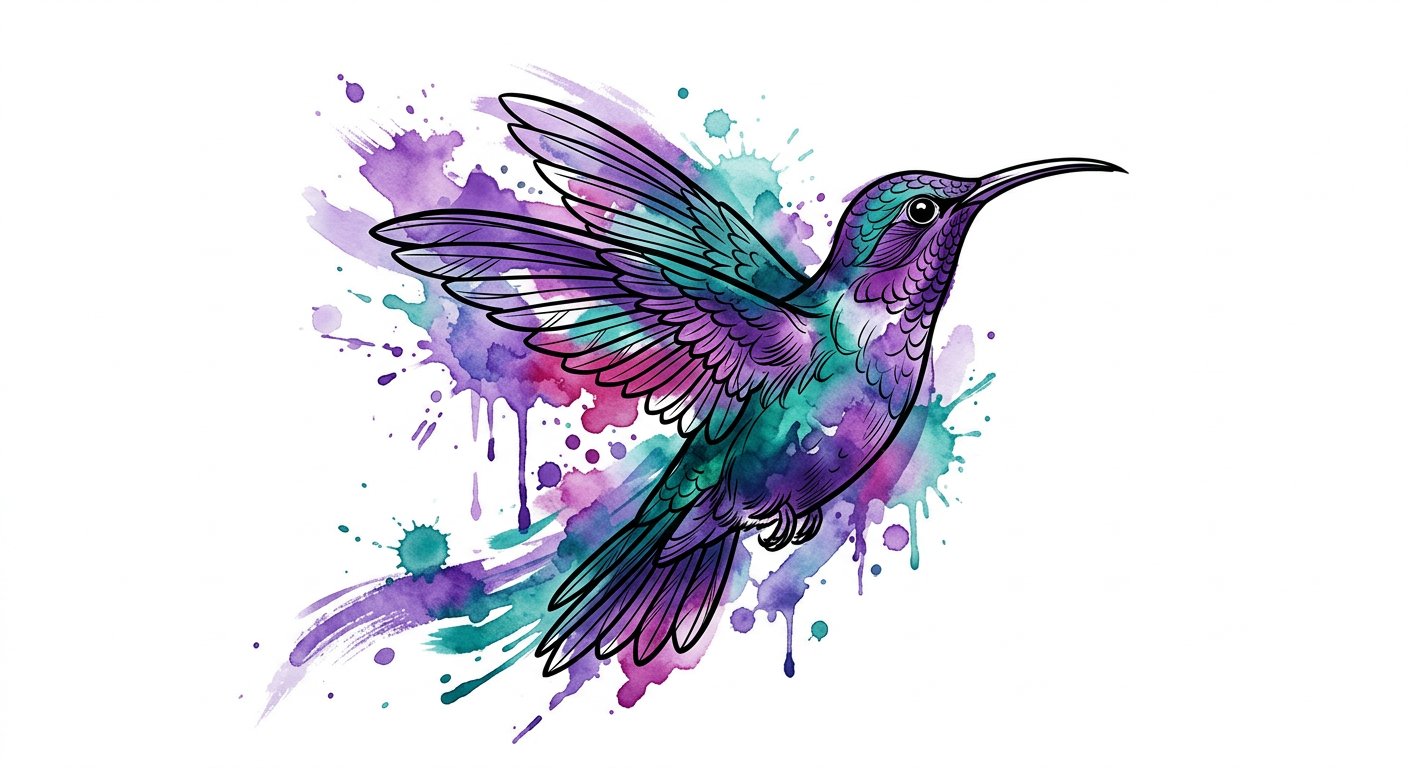
Better than any other style. Bold outlines and saturated colours can hold their shape for 30+ years with minimal touch-ups, especially in placements with limited sun exposure. Compare that to watercolour or fine line tattoos, which often need touch-ups every 5–10 years.
What's the difference between traditional and neo-traditional?
Same DNA, expanded vocabulary. Neo-traditional keeps the bold outlines but adds a much wider colour palette, more detailed shading, and contemporary subjects (think pop culture, fantasy, ornate florals). If a piece looks "old school but more colourful and detailed," it's probably neo-traditional.
Can I get a small traditional tattoo, or does it have to be large?
Small works fine. A 2-inch traditional rose, swallow, or anchor is a classic first tattoo — the bold outlines hold up at small sizes better than fine line styles. Below 1.5 inches, though, the style starts to lose its punch — the palette and outline weight need a bit of room to read.
Is Sailor Jerry the same as American Traditional?
Sailor Jerry (Norman Collins) is the name most associated with the style, but "American Traditional" or "old school" is the broader category. Sailor Jerry's flash and motifs are a subset — the most iconic subset, but not the only one. Contemporaries like Bert Grimm, Cap Coleman, and later Ed Hardy all contributed to what we now call traditional.
Where traditional works
Forearm Tattoos for Men
Inner and outer forearm designs
Sleeve Tattoo Designs
Plan a full or half sleeve that reads as one piece
Rose Tattoo Designs
Roses in traditional, fine line and watercolor
Skull Tattoo Designs
Skulls in blackwork, traditional and realism
Neo-Traditional Tattoos
Classic forms with a wider palette
Hand Tattoos for Men
Back-of-hand and knuckle designs