Popular Japanese Designs
The History of Japanese Tattoos
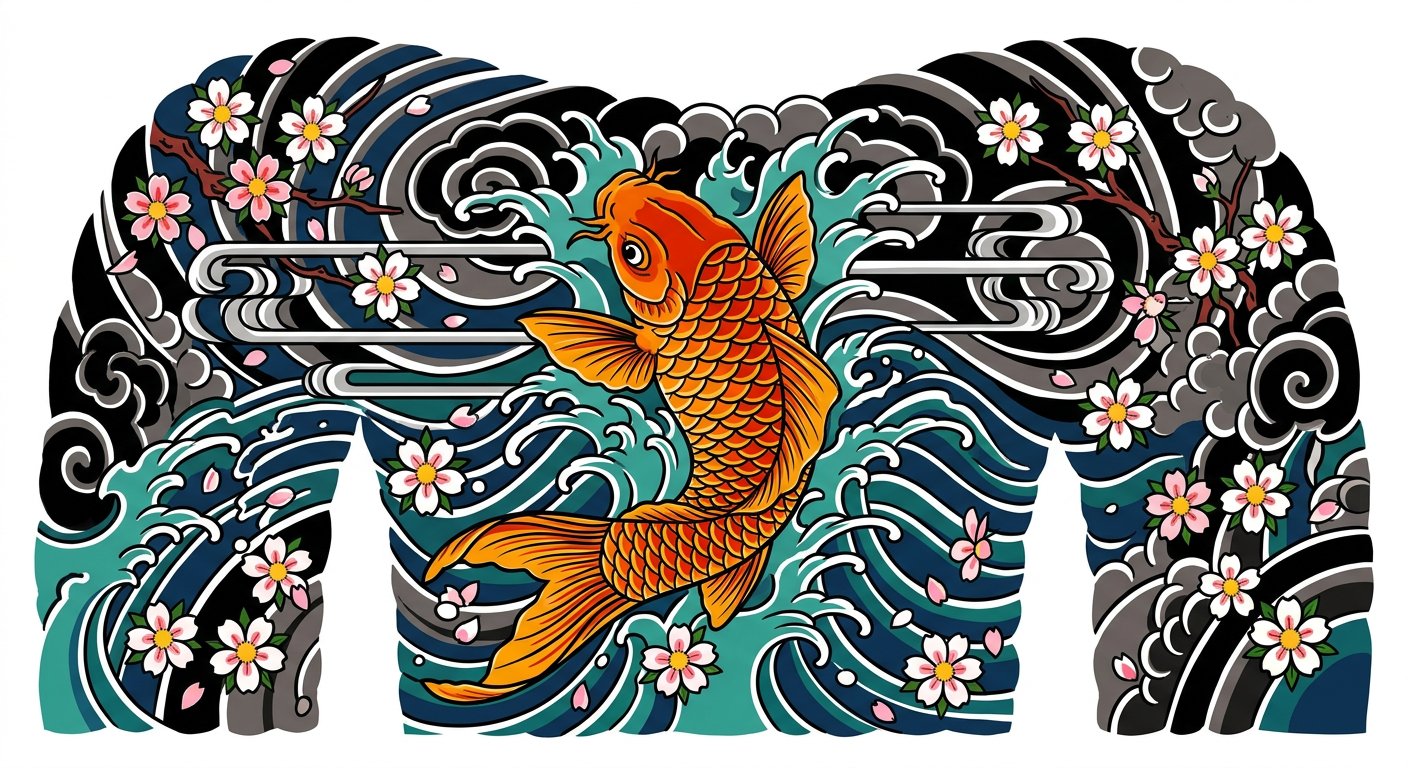
Japanese tattoos — known traditionally as irezumi — trace back over 10,000 years to the Jōmon period, but the style we recognize today emerged during the Edo period (1603–1868). Drawing heavily from ukiyo-e woodblock prints and the illustrated novel Suikoden, Edo-era tattoo masters developed a visual language built on bold outlines, rich symbolism, and full-body compositions designed to flow with the wearer's anatomy. Once associated with the criminal underworld and later the yakuza, irezumi has since evolved into a globally celebrated art form. Modern Japanese tattoos retain the core grammar — strong black linework, saturated colors, narrative motifs set against wind, water, and cloud backgrounds — while reaching audiences far beyond Japan. Whether rendered as a full back piece or a single forearm sleeve, the style is unmistakable: every element carries meaning, and every composition tells a story.
Japanese Tattoo Symbolism & Meanings
Every motif carries meaning. Here's what the most common japanese tattoo elements represent.
Dragon (Ryū)
Wisdom, strength, and benevolent power. Japanese dragons protect rather than destroy.
Koi fish
Perseverance, transformation, and overcoming adversity — based on the legend of a koi swimming up a waterfall to become a dragon.
Cherry blossom (Sakura)
The fleeting nature of life. Beauty made meaningful by its impermanence.
Tiger (Tora)
Strength, courage, and protection against evil spirits and disease.
Hannya mask
A jealous female demon from Noh theatre — represents pain, obsession, and emotional intensity.
Phoenix (Hō-ō)
Rebirth, triumph, and the harmony of yin and yang.
Waves and water
Life's continuous motion — power and grace, the challenges we navigate.
Peony
Wealth, good fortune, and masculine elegance — often called the king of flowers.
Where to Place a Japanese Tattoo
Japanese tattoos are designed to flow with the body, which is why they're traditionally placed on large surfaces — full back pieces, full sleeves, chest panels, and leg pieces are most authentic. The style relies on negative space and background elements (waves, clouds, wind bars) to tie multiple motifs into one cohesive composition. Smaller standalone pieces work too, but losing the background context shifts the look toward neo-Japanese or American-influenced interpretations.
Why Choose AI for Japanese Tattoos?
Stencil-Ready Plates
Your Design Report pairs its lead japanese design with a stencil study — clean, transfer-ready linework your artist can work from.
Same-day plates
A brief for your japanese tattoo in about two minutes, and the drawn plates the same day.
Try Before You Ink
Visualize your japanese tattoo before committing to permanent ink.
Free consultation · No account or credit card needed
AI vs Traditional Design Process
| Feature | AI Generator DesignMyInk | Traditional Artist |
|---|---|---|
| Time to Design | Brief in about 2 minutes, book the same day | 2-5 days |
| Cost | Free brief · $14.99 once | $50-200/hour |
| Designs to Compare | 12 in one report | 1-2 concepts |
| Style Options | 12 styles, 3 drawn in each book | Artist specialty only |
| Available 24/7 | ||
| Stencil-Ready Linework | Included in report | Extra design time |
| Session & Price Guidance | Honest ballparks included | Quoted in the chair |
Japanese Tattoo FAQ
What does a Japanese tattoo symbolize?
Every motif in Japanese tattooing carries specific meaning. Dragons represent wisdom and protection, koi fish symbolize perseverance, cherry blossoms reflect life's impermanence, and hannya masks embody emotional intensity. The style as a whole emphasizes narrative — your tattoo tells a story about values, struggles, and aspirations.
What is irezumi?
Irezumi (入れ墨) is the Japanese term for traditional tattooing. It refers to the style developed in the Edo period: bold outlines, rich color, full-body compositions, and motifs drawn from mythology, folklore, and ukiyo-e prints. Authentic irezumi was historically applied by hand using metal needles (tebori) — though most modern Japanese-style tattoos use electric machines.
How long does a Japanese sleeve or back piece take?
A full Japanese back piece typically takes 40–80 hours spread across multiple sessions over 6–18 months. A full sleeve runs 25–40 hours. The time reflects the dense detail and the importance of background elements (waves, wind, clouds) that connect each motif. AI tools can't replace that craftsmanship — but they're useful for designing the composition before you commit to a tattoo artist.
What's the difference between Japanese and American traditional tattoos?
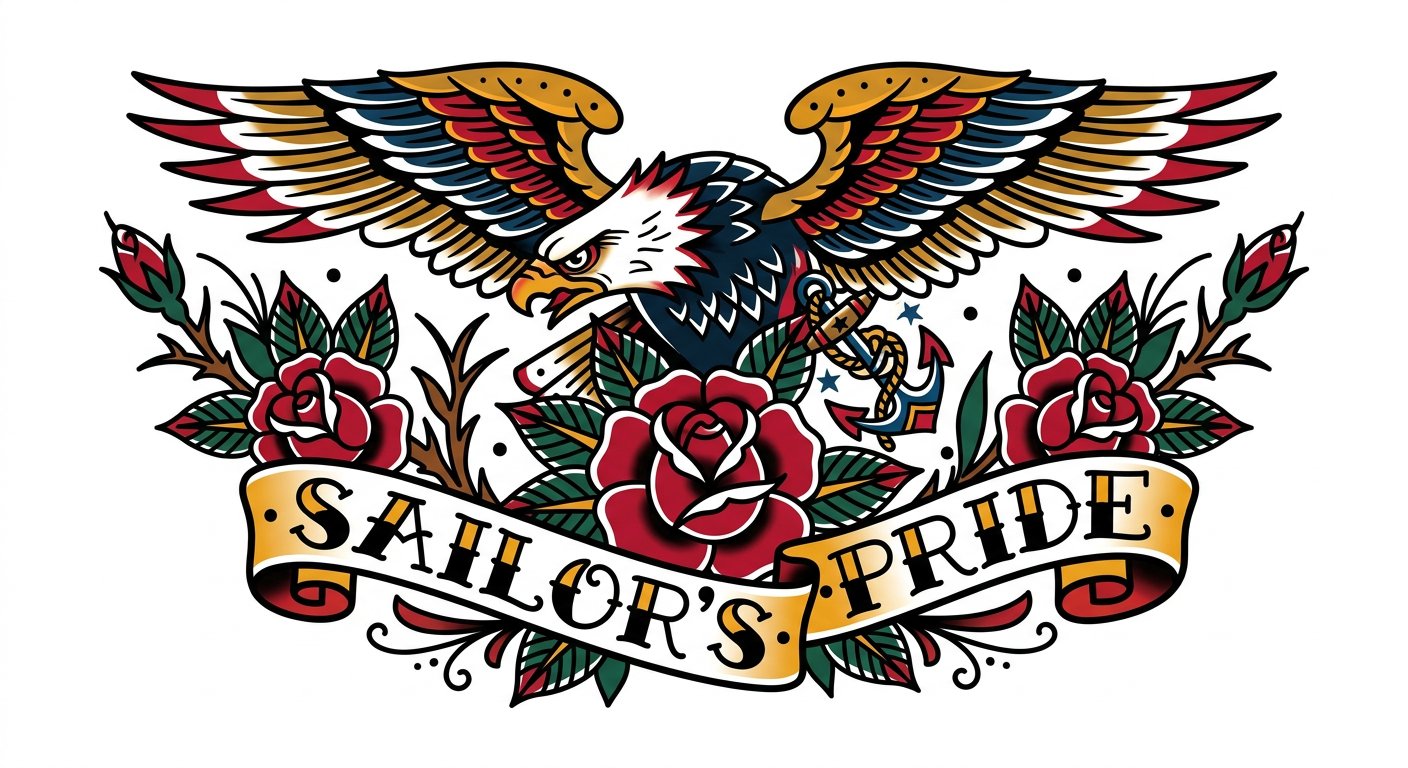
Both styles use bold outlines and limited color palettes, but Japanese tattoos prioritize flowing full-body compositions with narrative depth, while American traditional uses smaller, standalone designs (anchors, roses, eagles). Japanese tattoos rely on background elements to unify the piece; American traditional treats each design as a self-contained statement.
Are Japanese tattoos cultural appropriation?
Japanese tattoo culture has been shared globally for over a century, and Japanese tattoo masters have welcomed international clients and apprentices. The respectful approach: understand the symbolism of motifs you choose, work with an artist trained in the tradition, and avoid mixing motifs in ways that contradict their meaning. Wearing a kanji you don't understand or stacking unrelated symbols is the issue — not the style itself.
What colors are used in Japanese tattoos?
Traditional irezumi uses a deliberately limited palette: bold black for outlines, deep red, rich green, golden yellow, and occasional blue. The restraint is intentional — fewer colors create stronger contrast and let the linework define the composition. Modern Japanese tattoos sometimes expand the palette, but the classic look stays restrained.
Where japanese works
Sleeve Tattoo Designs
Plan a full or half sleeve that reads as one piece
Dragon Tattoo Designs
Japanese and Western dragons for sleeves and backs
Forearm Tattoos for Men
Inner and outer forearm designs
Tattoo Designs for Men
Placements, styles and subjects men choose most
Traditional Tattoos
Bold outlines and the classic flash palette
Neo-Traditional Tattoos
Classic forms with a wider palette