The History of Geometric Tattoos
Geometric tattoos draw from a millennia-deep well — ancient cultures from the Egyptians to the Pythagoreans saw mathematical patterns as sacred. The "sacred geometry" subset (flower of life, metatron's cube, vesica piscis) appears in cathedral architecture, Islamic art, and Hindu mandalas. As a recognised tattoo style, geometric work emerged in the 1990s alongside neo-tribal blackwork — artists like Xed LeHead, Tomas Tomas, and Gerhard Wiesbeck pioneered the use of dotwork, fine line, and precise compass-drawn shapes to build complex patterns on skin. The 2010s mandala revival, driven by artists like Dilok Lertloompoo and Coen Mitchell, fused geometric precision with spiritual symbolism and helped the style become one of the most-tattooed contemporary forms. Geometric tattoos appeal particularly to people who want intricate visual complexity without representational imagery — the patterns themselves are the point.
Geometric Tattoo Symbolism & Meanings
Every motif carries meaning. Here's what the most common geometric tattoo elements represent.
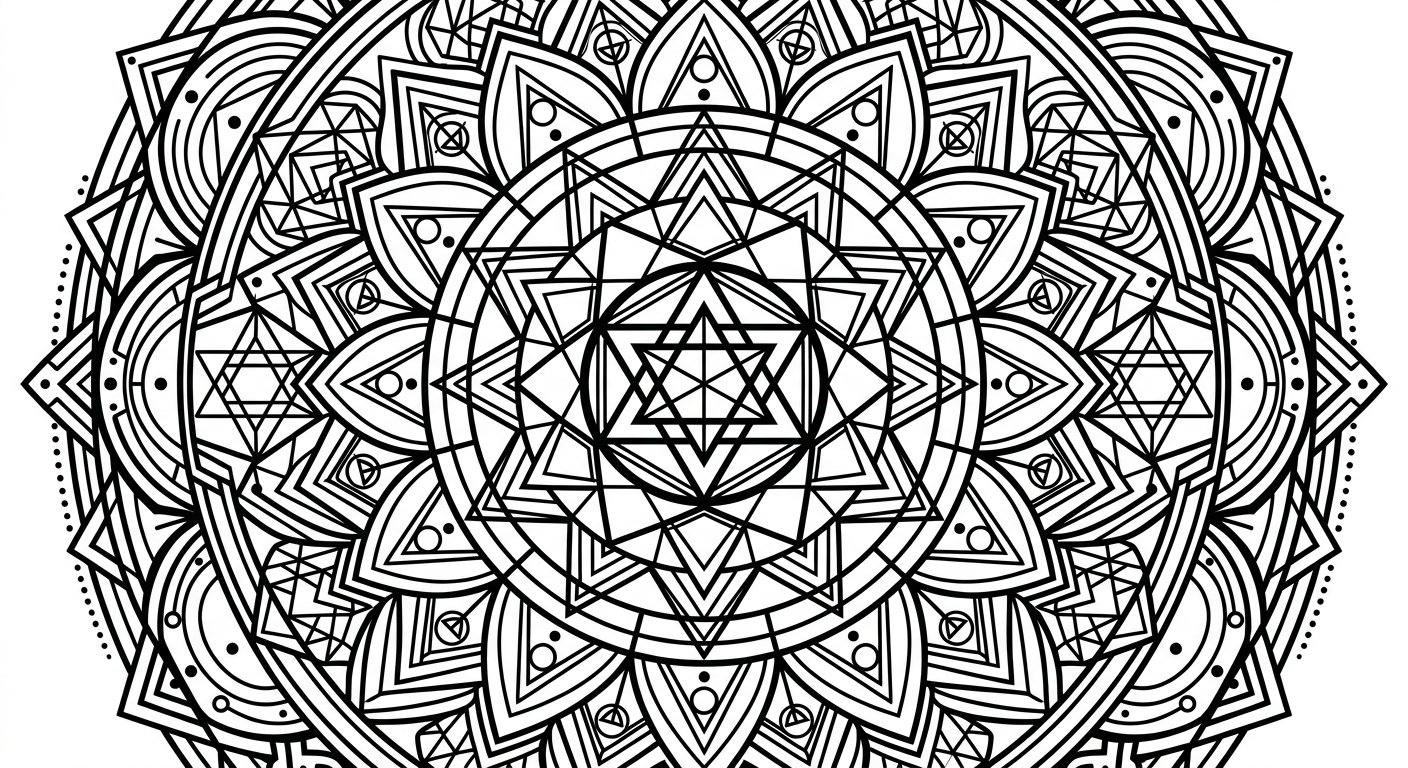
Mandala
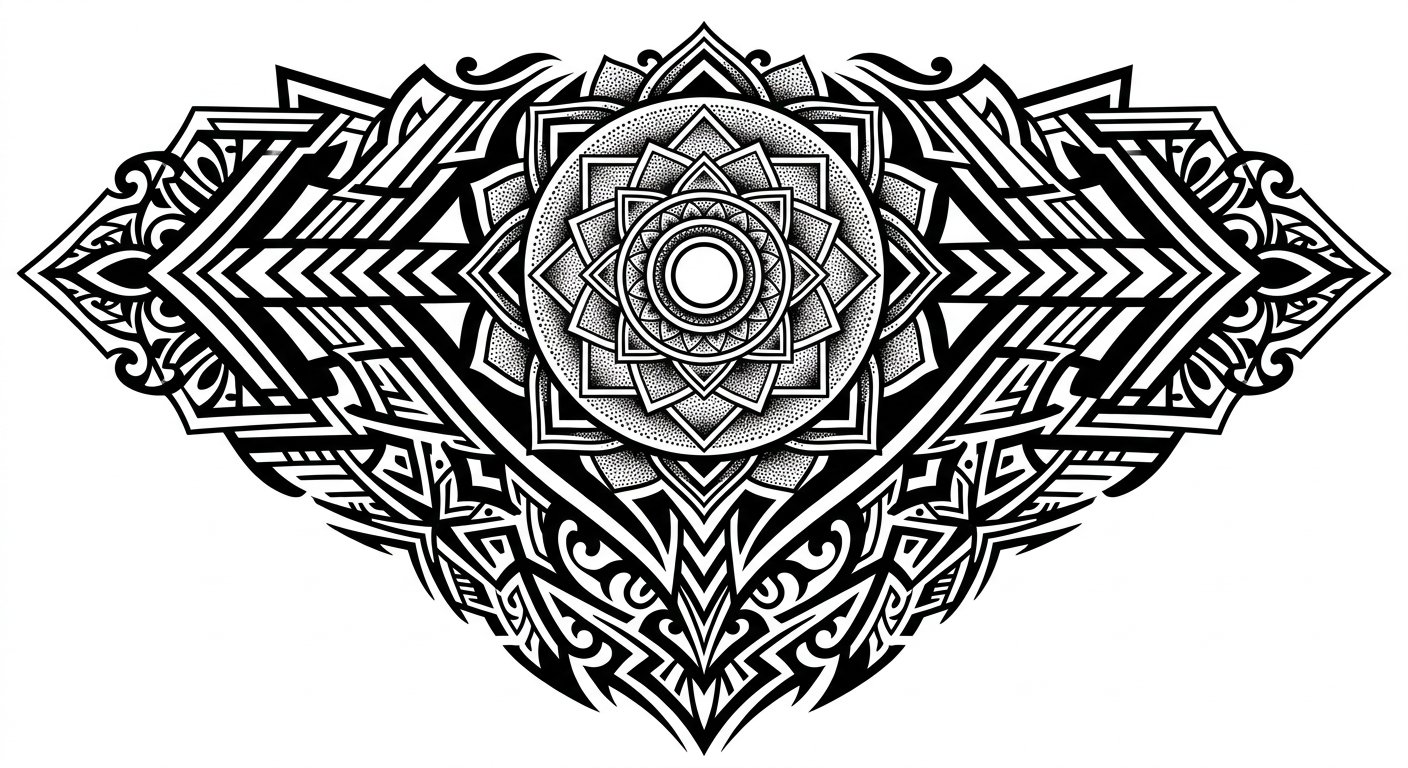
Wholeness, the universe, and the self. The circular form represents unity; the radiating patterns represent the layers of meaning behind it.
Flower of Life
Creation, the interconnection of all life, and the underlying patterns of the universe. One of the oldest sacred geometry symbols.
Sri Yantra
Cosmic creation, divine balance, and the meeting of masculine and feminine energy in Hindu tradition.
Metatron's Cube
Protection, structure, and the building blocks of reality. Contains all five Platonic solids.
Triangle
Strength, balance, and the trinity of mind, body, spirit. Direction matters: upward = ascending, downward = grounding.
Hexagon / Honeycomb
Harmony, efficiency, and natural order. Hexagons appear throughout nature as the most efficient packing shape.
Spiral
Growth, evolution, and the journey inward. Found in shells, galaxies, and weather patterns.
Vesica Piscis
The intersection of two worlds — material and spiritual, human and divine. Two overlapping circles forming an almond shape.
Where to Place a Geometric Tattoo
Geometric tattoos shine on placements where the symmetry can be appreciated: outer forearm, upper arm, calf, back, chest, and the top of the thigh are all ideal. Mandalas work especially well on circular surfaces — the back of the hand, the top of the foot, the centre of the chest. The style scales well: a 2-inch geometric piece can hold detail thanks to the pattern's built-in repetition, and a 12-inch piece doesn't feel empty. The one warning: geometric tattoos are less forgiving of placement on curved or asymmetric body parts (forearm/calf inner curves) — distortion shows immediately when the pattern doesn't flow with the muscle.
Why Choose AI for Geometric Tattoos?
Stencil-Ready Plates
Your Design Report pairs its lead geometric design with a stencil study — clean, transfer-ready linework your artist can work from.
Same-day plates
A brief for your geometric tattoo in about two minutes, and the drawn plates the same day.
Try Before You Ink
Visualize your geometric tattoo before committing to permanent ink.
Free consultation · No account or credit card needed
AI vs Traditional Design Process
| Feature | AI Generator DesignMyInk | Traditional Artist |
|---|---|---|
| Time to Design | Brief in about 2 minutes, book the same day | 2-5 days |
| Cost | Free brief · $14.99 once | $50-200/hour |
| Designs to Compare | 12 in one report | 1-2 concepts |
| Style Options | 12 styles, 3 drawn in each book | Artist specialty only |
| Available 24/7 | ||
| Stencil-Ready Linework | Included in report | Extra design time |
| Session & Price Guidance | Honest ballparks included | Quoted in the chair |
Geometric Tattoo FAQ
How long does a geometric tattoo take?
Longer than the design might suggest. The precision required for clean lines and consistent dotwork makes geometric work slow — a 4-inch mandala typically takes 3–6 hours, and a full sleeve 30–50 hours. Most artists charge a premium for geometric because the margin for error is so small; one shaky line ruins the symmetry.
Will my geometric tattoo stay symmetrical as I age?
It will distort slightly with weight changes and skin ageing — anywhere on the body sees this, but it's most visible in geometric work because the eye is calibrated to the original symmetry. To minimise distortion, place geometric pieces on areas that don't change much with weight (upper arm, calf, mid-back) and avoid placements that stretch heavily (lower back, sides, breasts).
Is sacred geometry the same as geometric tattooing?
Sacred geometry is a subset. It refers specifically to patterns with spiritual or metaphysical meaning — mandalas, flower of life, Metatron's cube, Sri Yantra. Pure geometric work can be ornamental without spiritual claims (just shapes, lines, and patterns). If you don't want to make a spiritual statement, ask for "ornamental geometric" rather than "sacred geometry."
Can geometric tattoos be done in colour?
Yes, but classic geometric tattoo aesthetics lean black-and-grey or pure black. Colour geometric work exists but tends to age less gracefully — the precise edges between colour fields blur over time. If you want colour, consider neo-traditional with geometric elements, or watercolour-meets-geometric hybrid styles.
How do I make sure my geometric tattoo is truly symmetrical?
Pick an artist who uses stencils and grid markings during the tattoo session. The best geometric artists draw the design freehand on paper, scan it, refine the symmetry digitally, and apply the stencil to skin with multiple alignment marks. Watch their video portfolio if available — you can see whether they actually measure during the work or eyeball it.
What's the easiest geometric design for a first tattoo?
A small mandala (3–4 inches) on the inner forearm or upper arm. The radial symmetry is forgiving of slight wobbles, the placement is moderate-pain, and you get a sense of how the precise dotwork or fine line work feels. Avoid full back pieces or full sleeves as a first tattoo — geometric at scale takes serious commitment.
Where geometric works
Forearm Tattoos for Women
Fine line and botanical forearm designs
Hand Tattoos for Men
Back-of-hand and knuckle designs
Wolf Tattoo Ideas
Wolves in realism, geometric and blackwork
Meaningful Tattoo Ideas
Symbols, dates and tributes that carry a story
Dotwork Tattoos
Stippled shading and mandalas
Abstract Tattoos
Freeform shapes and negative space