Popular Dotwork Designs
The History of Dotwork Tattoos
Dotwork tattooing — building images entirely from individual dots — has roots in two parallel traditions: the hand-poked tribal techniques of Borneo, Polynesia, and Thai sak yant, and the 19th-century pointillism movement led by painters like Seurat and Signac. As a contemporary tattoo style, dotwork emerged in the 1990s and 2000s through artists like Xed LeHead, Tomas Tomas, and Tomas Tomas's student Daniel DiMattia. The style aligns naturally with sacred geometry — both use mathematical precision and pattern repetition — so dotwork and geometric work often appear together in the same compositions. Modern dotwork has split into several sub-styles: pure stipple shading (gradient effects built from dot density), geometric dotwork (sacred geometry rendered in dots), illustrative dotwork (animals, portraits, scenes built from dots), and hand-poke (single-dot-at-a-time tattooing without machines). The unifying technique: every shadow, gradient, and texture is made from individual dots — no continuous lines, no solid fills.
Dotwork Tattoo Symbolism & Meanings
Every motif carries meaning. Here's what the most common dotwork tattoo elements represent.
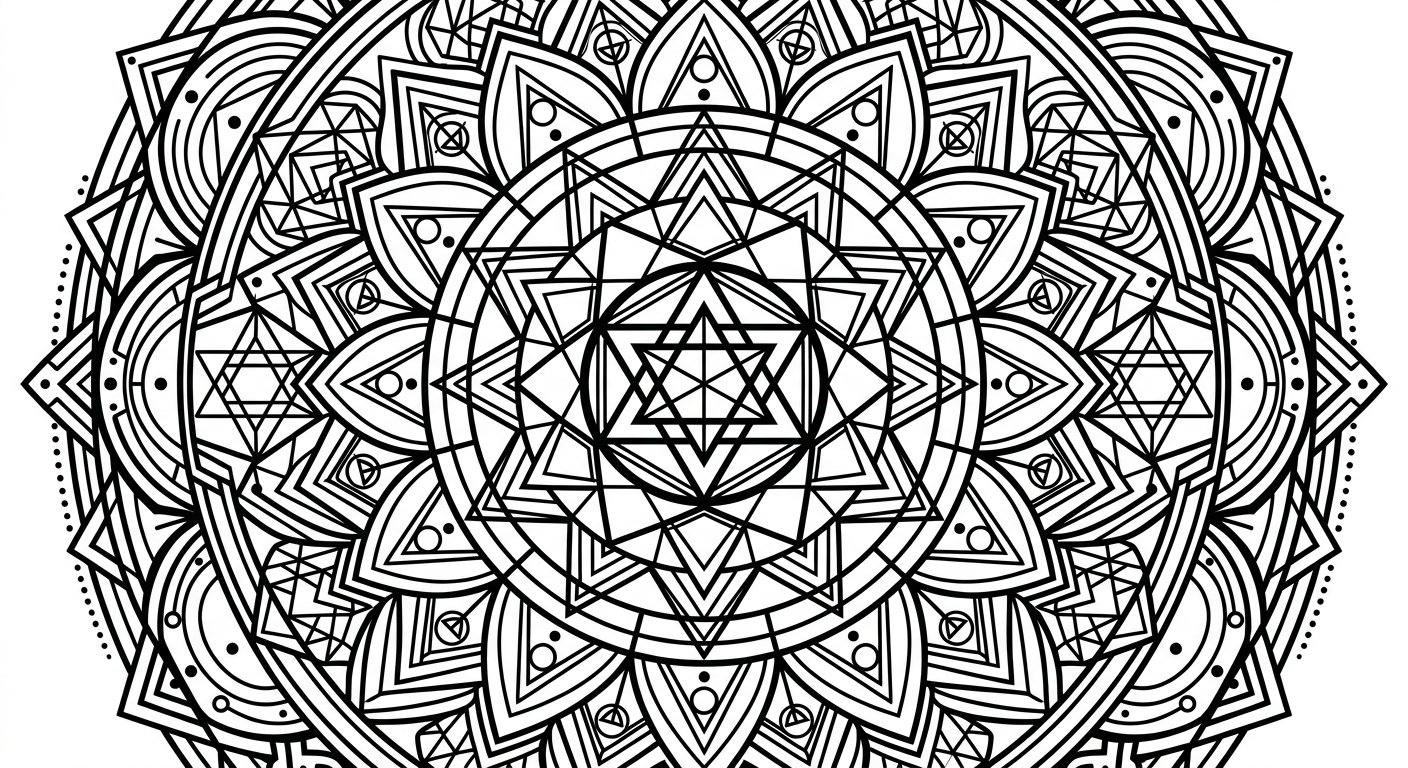
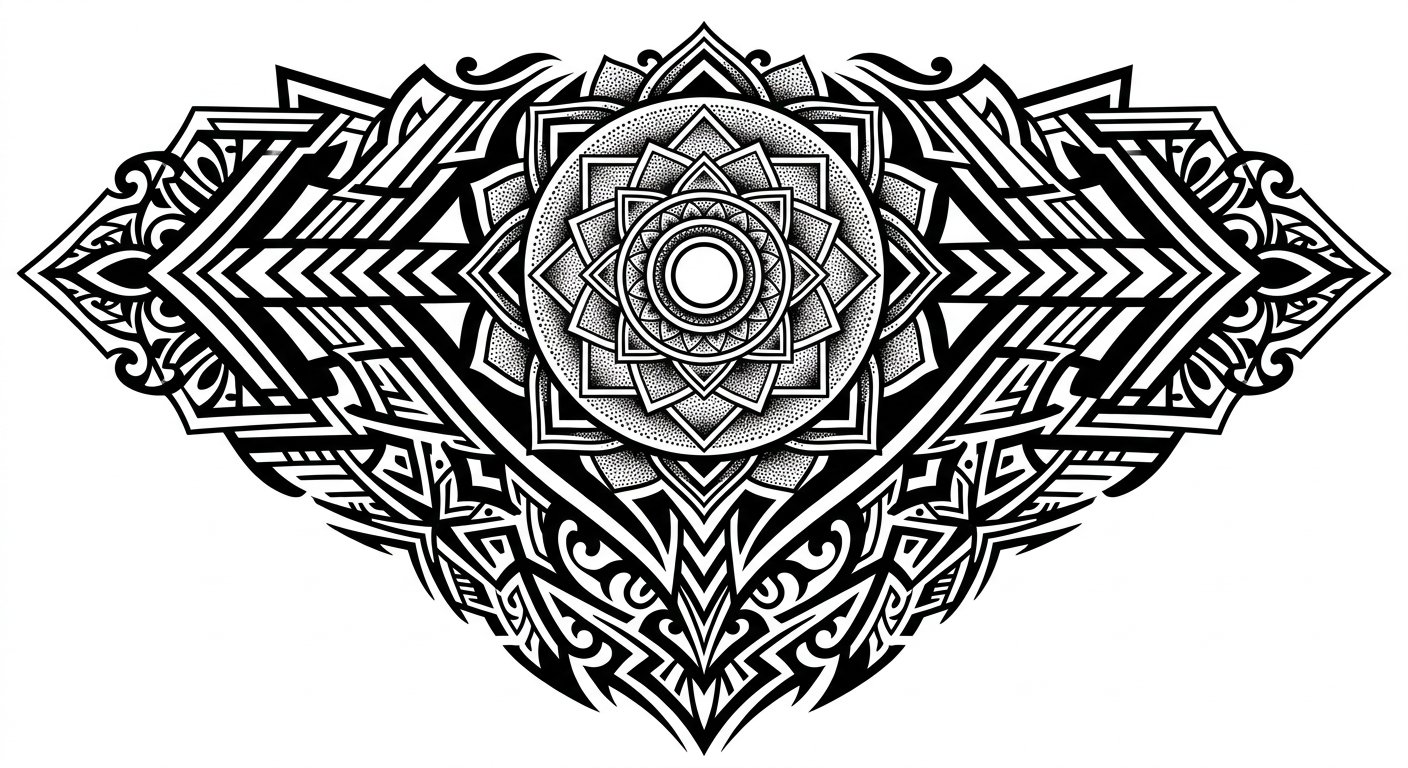
Dotwork mandala
Wholeness rendered through patience. The thousands of individual dots represent the many small choices that build a meaningful life.
Stippled animal portrait
Strength expressed through softness — the intensity of the subject contrasts with the delicate technique.
Sacred geometry pattern
Underlying order, mathematical truth, and the patterns hidden in nature. Dotwork emphasises the precision that geometric symbols demand.
Lunar calendar / moon phases
Cycles, rhythm, and time. Dotwork suits the soft luminous quality of moons.
Sak yant pattern
Protection, blessings, and spiritual strength — drawn from Thai monastic traditions where each yantra has specific meaning.
Constellation
Personal mythology, milestone moments, or the people you orient your life around. Dots literally represent stars.
Stippled flower
Patience, beauty, and the appreciation of small details. The texture mimics natural petal variation.
Skull (stippled)
Memento mori rendered with restraint — softer and more contemplative than blackwork or realistic skull tattoos.
Where to Place a Dotwork Tattoo
Dotwork shines on placements where the texture can be appreciated up close: forearm, upper arm, calf, back, and chest are ideal. Mandalas and geometric dotwork work especially well on circular surfaces (back of hand, top of foot, centre of back, sternum). The style is moderately durable — dot patterns hold up better than fine line work but slightly less well than solid blackwork. Sun exposure causes individual dots to fade unevenly, which can give the design a moth-eaten look over decades; SPF discipline matters. Avoid extremely small dotwork pieces — below 2 inches, the dot pattern starts to look like skin spots rather than intentional art.
Why Choose AI for Dotwork Tattoos?
Stencil-Ready Plates
Your Design Report pairs its lead dotwork design with a stencil study — clean, transfer-ready linework your artist can work from.
Same-day plates
A brief for your dotwork tattoo in about two minutes, and the drawn plates the same day.
Try Before You Ink
Visualize your dotwork tattoo before committing to permanent ink.
Free consultation · No account or credit card needed
AI vs Traditional Design Process
| Feature | AI Generator DesignMyInk | Traditional Artist |
|---|---|---|
| Time to Design | Brief in about 2 minutes, book the same day | 2-5 days |
| Cost | Free brief · $14.99 once | $50-200/hour |
| Designs to Compare | 12 in one report | 1-2 concepts |
| Style Options | 12 styles, 3 drawn in each book | Artist specialty only |
| Available 24/7 | ||
| Stencil-Ready Linework | Included in report | Extra design time |
| Session & Price Guidance | Honest ballparks included | Quoted in the chair |
Dotwork Tattoo FAQ
How long does a dotwork tattoo take?
Significantly longer than equivalent line-based work. Each dot is placed individually — a 4-inch mandala typically takes 4–8 hours, and a full-back dotwork mandala can take 60–80 hours across many sessions. Most artists charge a premium for dotwork because of the time and the precision required.
How does dotwork age compared to other styles?
Better than fine line, slightly worse than solid blackwork. Individual dots fade more evenly than fine lines, but uneven sun exposure can cause some dots to fade faster than others, creating a slightly worn texture over 15–20 years. To maximise lifespan: keep dot density high (so individual fades aren't obvious), avoid sun-exposed areas, and use SPF.
What's the difference between dotwork and stippling?
They overlap heavily. "Stippling" specifically refers to the shading technique — building gradients from varying dot density. "Dotwork" is the broader style — anything where dots are the dominant element, including stipple shading but also pure pattern work and dotted geometric designs. Most artists use the terms interchangeably.
Is hand-poked dotwork better than machine dotwork?
Different aesthetic, similar quality. Hand-poked work has a slightly more organic, human-touch quality — small variations between dots that machines tend to eliminate. Machine dotwork is more precise and consistent. Both are real techniques with skilled practitioners; pick based on the look you want, not the assumption that one is "more authentic."
Does dotwork hurt more than line tattoos?
Slightly less, in pure pain intensity — single dots are quick stabs rather than continuous needle drag. But cumulative discomfort over the long sessions dotwork requires can be more tiring. The pain quality is different: more rhythmic and tolerable for most people than continuous line work, but the duration can be exhausting.
Can dotwork be done in colour?
Yes, but classic dotwork is black-only. Coloured dotwork exists — typically using muted earthy tones (rust, ochre, deep blue) layered with black dots — but it's a niche specialty. Most colour dotwork ages faster than black-only because the lighter pigments fade unevenly between dots.
Where dotwork works
Forearm Tattoos for Women
Fine line and botanical forearm designs
Medusa Tattoo Ideas
Medusa in fine line, realism and dotwork
Meaningful Tattoo Ideas
Symbols, dates and tributes that carry a story
Geometric Tattoos
Shapes, symmetry and sacred geometry
Blackwork Tattoos
Solid black and negative space
Linework Tattoos
Single-weight line drawings